
Mayank Jain was interviewed by “Aaj Ka Prahari” news paper during the Vishv Hindi Parishad’s 2 day Hindi Sammalen in prestigious Vigyan Bhavan In New Delhi in Nov 2025
Story of Mayank Jain- A journey of Language, Identity and Resilience
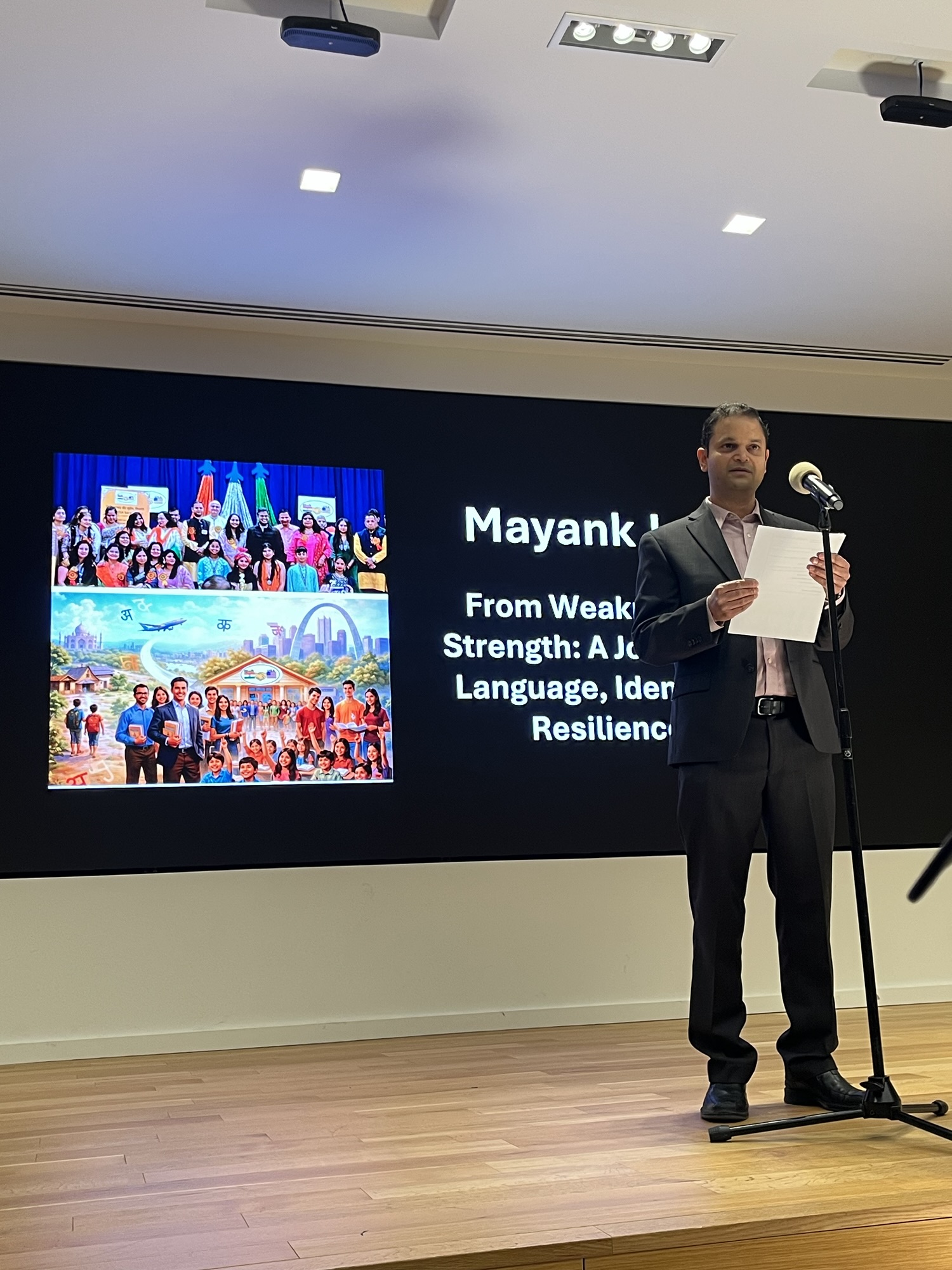
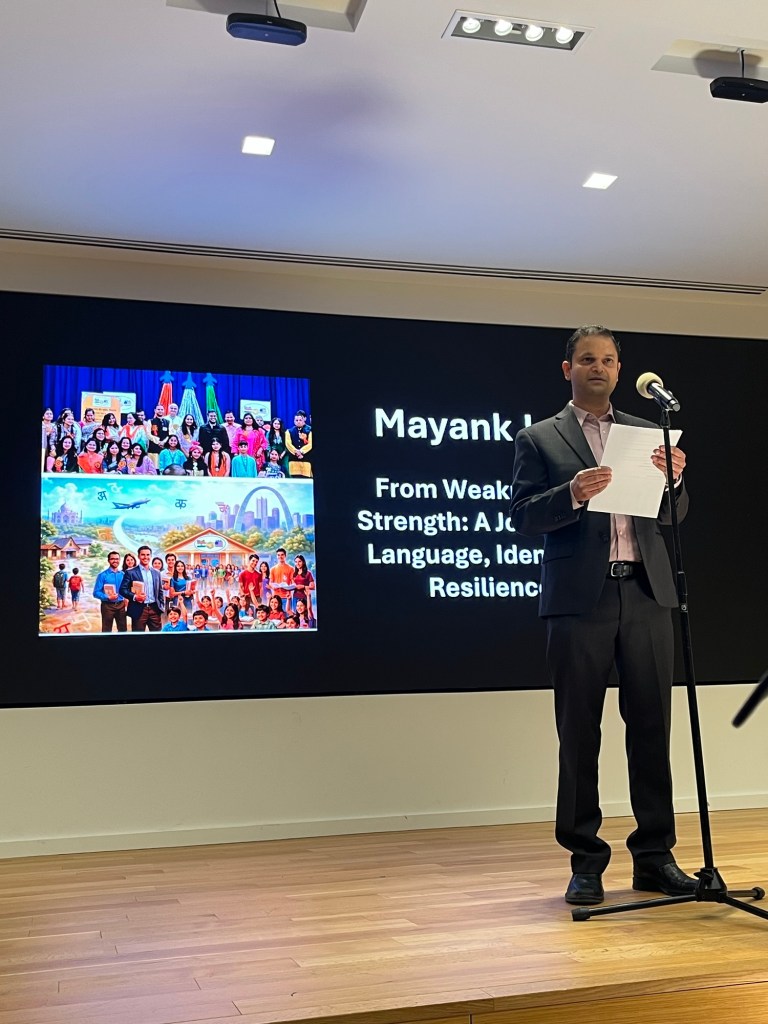
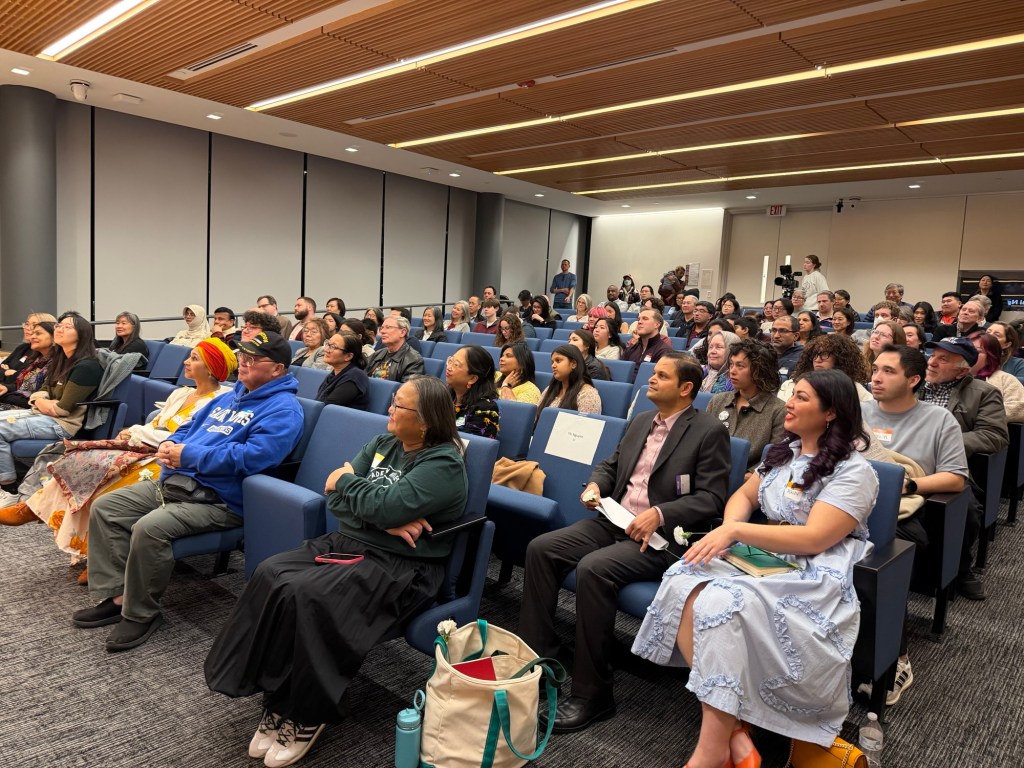
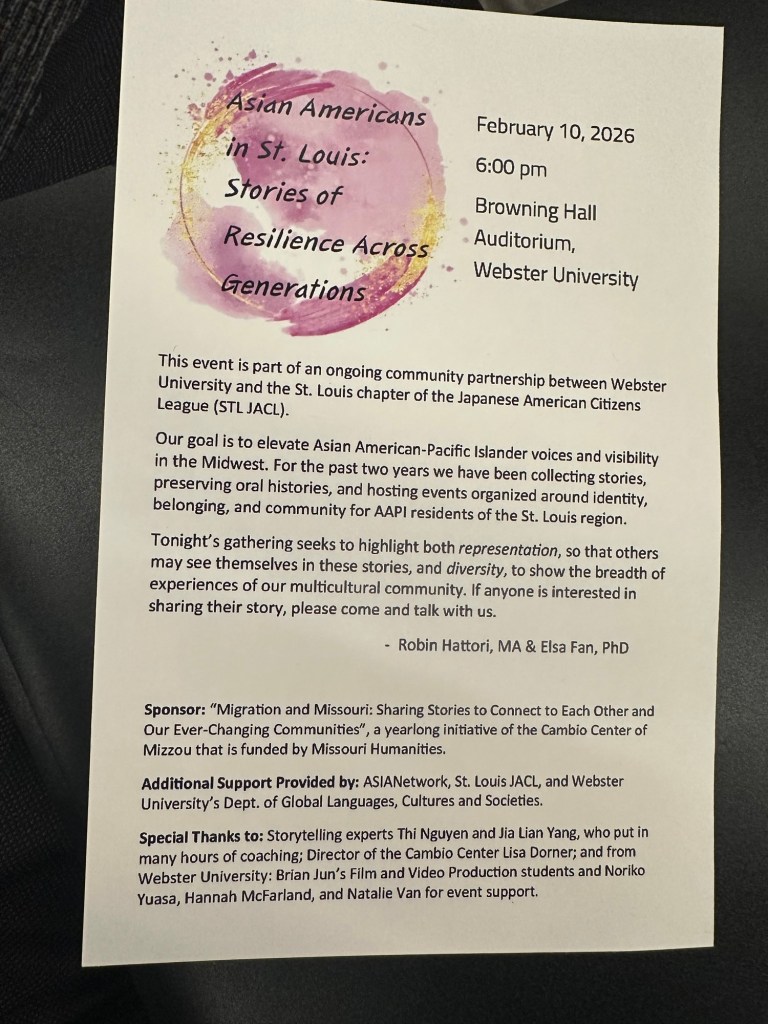
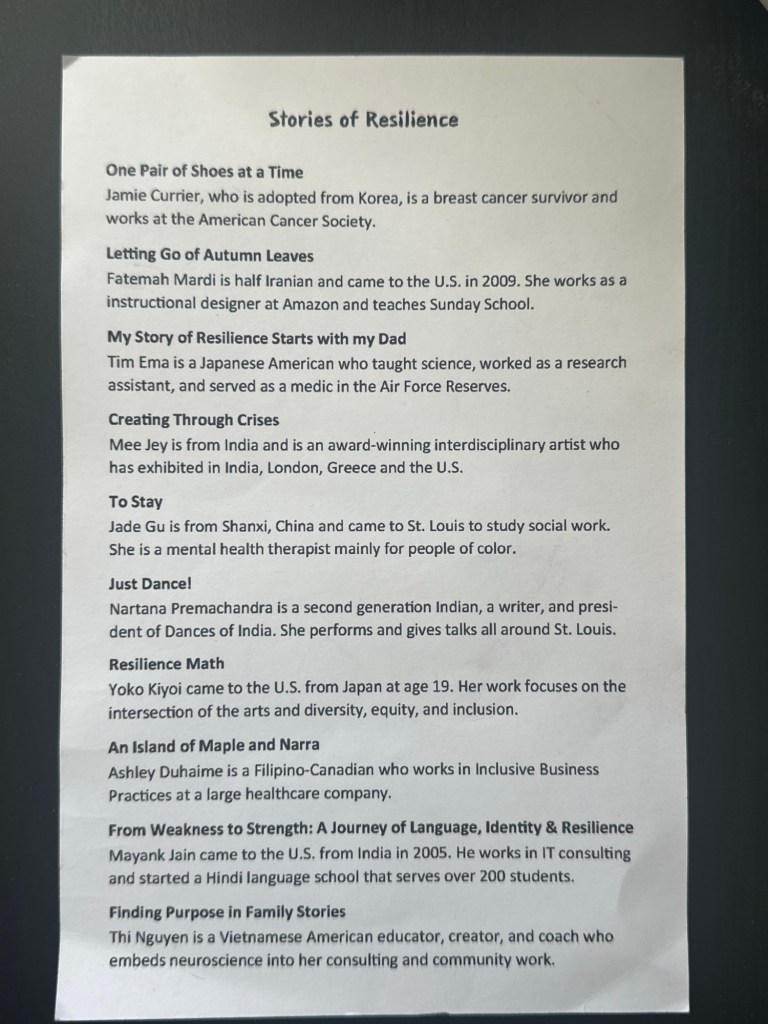
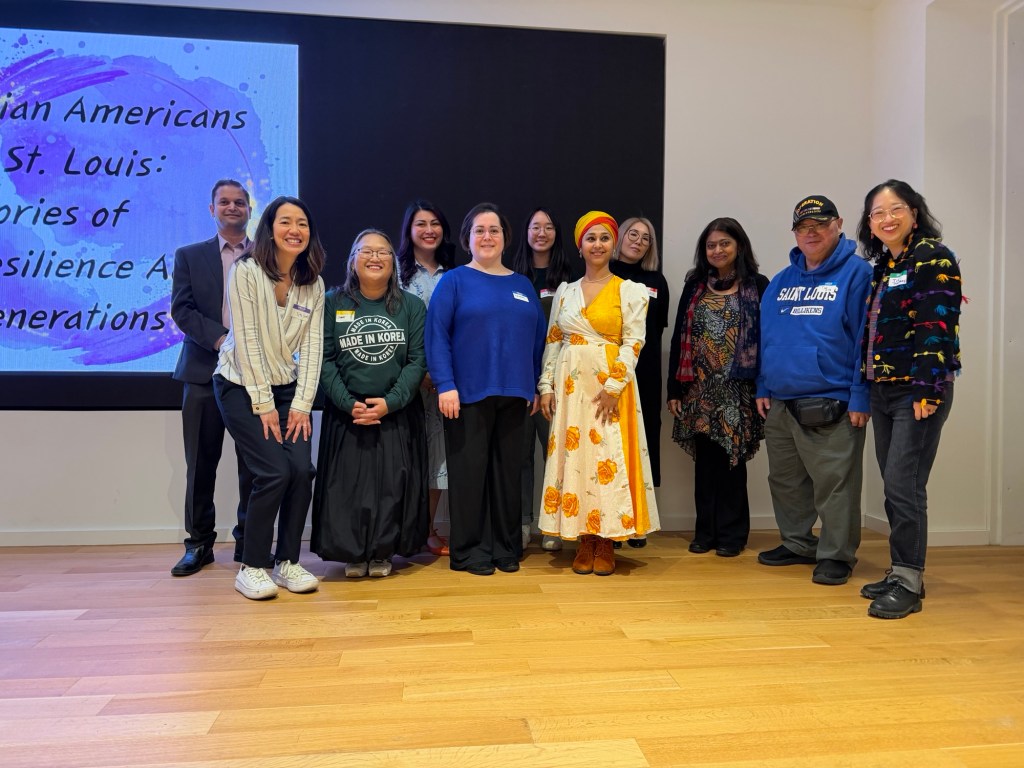
On Feb 10th 2026, HindiUSA Saint Louis founder Mr. Mayank Jain participated in “Migration and Missouri: Sharing Stories to Connect to Each Other and Our Ever-Changing Communities,” an Asian American storytelling initiative that brought together immigrant voices and their descendants to share personal journeys of resilience, identity, and belonging.
The event was sponsored by the University of Missouri Cambio Center, with additional support from AsiaNetwork, Missouri Humanities, and Webster University’s Department of Global Languages, Cultures and Societies. It was held at Browning Hall Auditorium, Webster University.
Ten participants from the St. Louis region were selected to present their stories, highlighting the diverse immigrant experiences that continue to shape Missouri’s communities. The storytelling evening fostered cross-cultural understanding, reflection, and meaningful community connection.
What was the story about?
The story reflects a personal journey of migration, identity, and resilience. It shares the challenges of adapting to a new country while holding on to language, culture, and values. There were moments of uncertainty and struggle, but also deep hope and determination to build something meaningful. The journey was not just about individual growth, but about creating opportunities for others in the community. Through persistence and belief, what once felt like a weakness gradually became a source of strength. The story highlights how immigrant experiences shape both personal identity and the broader community. Ultimately, it is a message of resilience, belonging, and the power of coming together to support one another.
Habit of Successful People – Optimal Approach in Whatever They Do
Habit of Successful People – Optimal Approach in Whatever They Do
Over the years, I’ve observed something very interesting about people’s habits. At a surface level, most of us seem to be on similar tracks. We all go to school—elementary, middle, and high school. Most of us go to college. Then we take up jobs, or some of us start businesses. The same pattern applies to our children as well—they get involved in activities like sports, music, academics, or volunteering.
But not everyone rises to the same level of success.
Some people just seem to excel—whether it’s in sports, music, school, or business. They perform well, lead others, and gain recognition. Others just do what is needed to get by. And then there are those who seem lost, unsure of why they’re doing what they’re doing.
So what sets successful people apart?
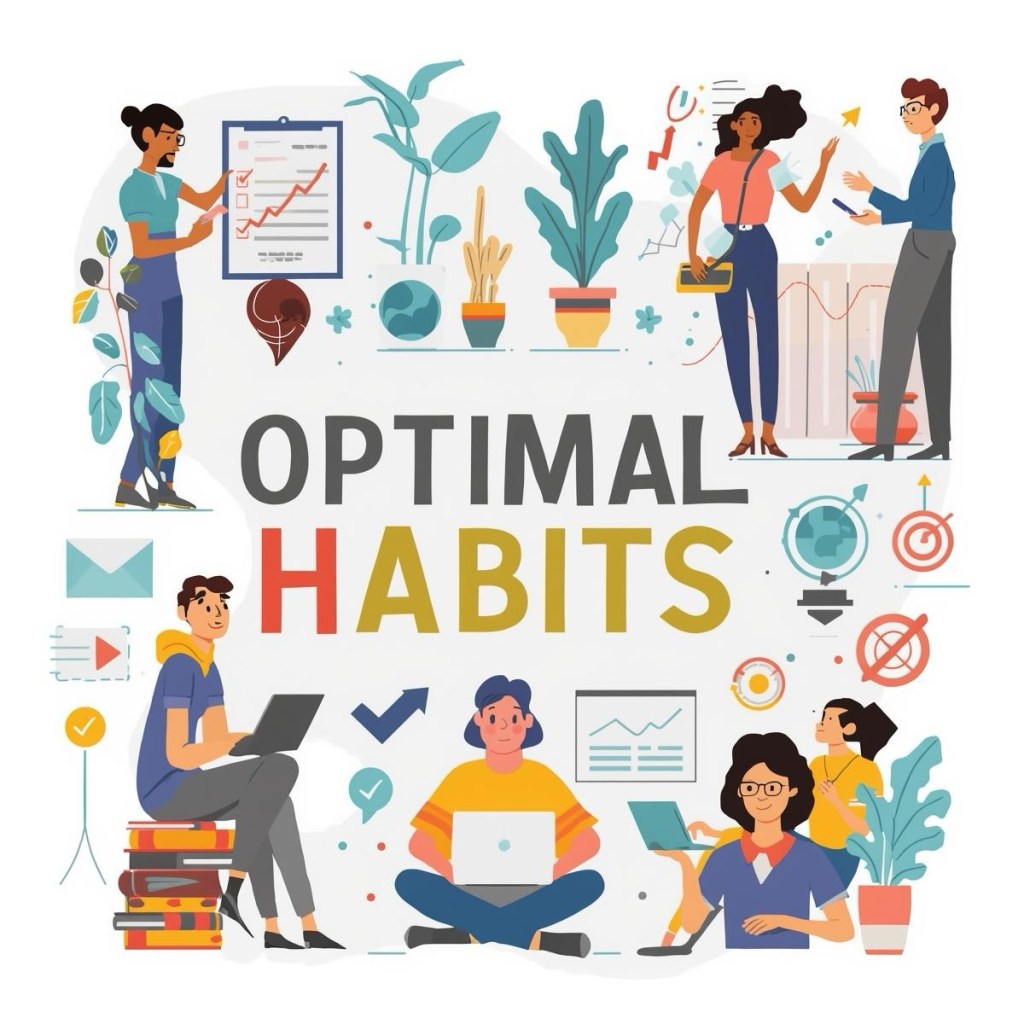
In my experience, it’s their habit of optimizing everything they do.
No matter what task they take on—big or small—they look for the best approach. Whether it’s washing dishes and using less water, or planning a business trip with the best combination of cost and convenience, they think about how to get the best result. When communicating, they make sure stakeholders are aligned. When working on group projects or nonprofit efforts, they ask the right questions ahead of time. They plan, they refine, and they improve—all the time.
This optimal mindset is what sets them apart. They do not accept mediocre results by default. They look for efficiency, precision, and meaningful outcomes in whatever they touch.
Of course, there’s a balance. You can’t optimize everything to perfection, otherwise it can become overwhelming or make people feel stressed. There must be room for joy, satisfaction, and flexibility. But in general, the more optimal your approach, the more consistent your success.
Whether it’s washing utensils, managing a meeting, choosing words carefully in a conversation, or writing an email—successful people apply thought. And over time, those small optimizations build into large achievements.
Mask project during COVID – 19


Mayank & his team have donated more than 2000 masks to St. Louis area hospitals and health-care workers (Click to read more)
Read more details on UMSL Blog : https://blogs.umsl.edu/news/2020/04/17/mayank-jain/
In 2020, I launched the tMask initiative after realizing I could not find an N95 mask for my wife, who was working on the front lines as a physician during the early days of COVID‑19. Driven by the urgent need to protect healthcare workers, I partnered with friends and mobilized volunteers to design and distribute three‑layer fabric masks to help extend the life of scarce N95 supplies. Leveraging the HindiUSA St. Louis community, I helped organize volunteers, set up request and distribution processes, and coordinated outreach to local hospitals. Together, we raised over $2,000 and ultimately produced nearly 3,000 masks for healthcare facilities. This effort was only possible because of the dedication of an incredible team and a diverse community that came together with a shared commitment to serve and protect others during a critical time.

Priority vs. Importance: Finding the Balance for a Successful Life

Overview
In today’s fast-paced and dynamic world, the distinction between priority and importance is crucial for personal and professional success. Studies suggest that 98% of people spend 90% of their time on daily grinds leaving aside the important activities that can give long term success and peaceful life. Priority tasks may includes managing work, household responsibilities, and attending to children’s needs, often leaving little room for activities that hold long-term benefits. Understanding and balancing priority tasks and important tasks can lead to greater fulfillment and success.
Priority vs. Importance
Priority tasks are those that demand immediate attention, such as earning a living, maintaining a household, and fulfilling daily responsibilities. These tasks are necessary to keep life running smoothly. However, focusing solely on priority tasks can lead to neglecting important activities that may not yield immediate results but are vital for long-term growth and satisfaction.
For instance, a friend’s wife, who was a homemaker, realized the need to increase their income as their children were growing up. In 2008, amidst daily priorities, he began investing in real estate. By 2024, he owned real estate assets worth $3 million. His success stemmed from balancing priority tasks with important ones, such as investing time in learning and planning for the future. This shift in focus allowed him to achieve long-term financial stability and personal contentment.
Benefits of Focusing on Important Tasks
Research shows that individuals who allocate a portion of their time to important tasks experience better mental and financial growth. These tasks include activities like reading to expand one’s mind, learning new skills, or improving personal areas that need attention. People who invest in these important activities remain engaged, constantly learning, and implementing new ideas.
However, learning alone is not sufficient. It’s crucial to apply the knowledge gained. This is where the concept of “when the rubber meets the road” becomes essential. Just as an airplane needs its tires to touch the ground before it can take off, people must put their knowledge into practice to see real results. Many individuals spend time learning and discussing concepts but fail to act on them, resulting in a lack of true contentment and growth.
The Dangers of Focusing Solely on Priorities
While addressing priority tasks is essential, an excessive focus on them can jeopardize personal relationships and overall well-being. Today’s distractions, such as mobile phones, TV streaming, and social media, add to the challenge. People often complete their daily priority tasks just to find some “me-time,” inadvertently neglecting their spouses or children. Building and maintaining meaningful relationships is an important task that requires time and effort, which often gets overshadowed by daily priorities.
Conclusion
Achieving a balance between priority and important tasks requires self-awareness and proactive management of one’s time. While books and theories can provide guidance, real-life implementation is key. Identifying and focusing on important activities, learning continuously, and applying that knowledge to daily life can lead to a successful and fulfilling existence. Striving for this balance helps in cultivating a peaceful, self-aware personality, ultimately leading to a healthier and more rewarding life.
Corporate Divestiture – Learn about the teams involved and what they do?

Corporate mergers and divestitures have become a critical part of today’s business. In this article, we will discuss about what a divestiture program looks like and a typical work stream that should be created for a successful divestiture.
Divestiture of a company will require multiple business teams to work together both from seller side as well as buyer side. While, this article focuses on seller side, we will also touch base on various points related to buyer side.
A typical divestiture program is governed by Transition Service Agreement (TSA) that defines the services included as part of the divestiture. Usually the buyer and seller would engage with a consulting firm and/or use a legal team (internal or external) to define the TSA.
Generally, TSA services are categorized in various areas such as HR, Finance, IT, Compliance, Real Estate, procurement etc. and this leads to forming various work streams. Once a program is kicked off a PMO office should set up a work stream level kick -off meetings that provides overarching governance, program management expertise and ensures that TSA terms/ clause / extension and work stream specific details are understood, planned, executed, and monitored in a timely manner. PMO team should closely work with all work streams, capture status update, and provide guidance on program status & direction.
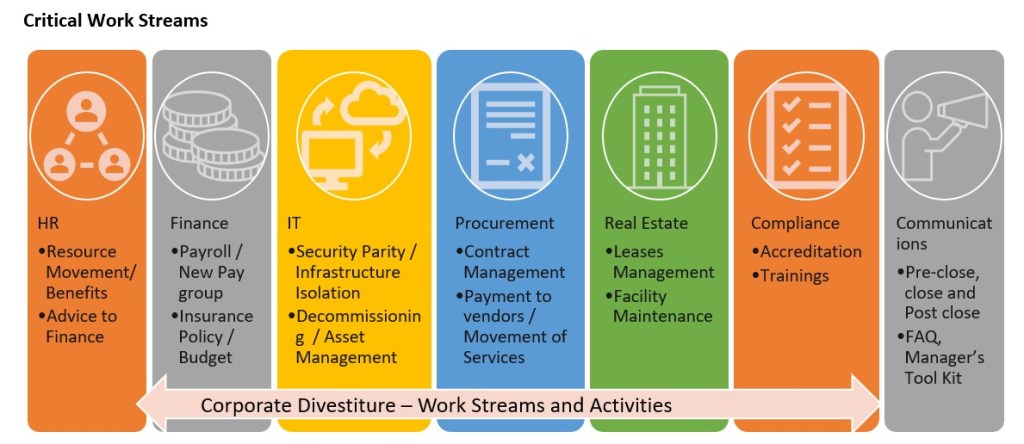
Let’s discuss on what should be the focus area of various work streams in a divestiture.
Transition Service Agreement (TSA)
- Transition Service Agreement must have a detailed information on various requirements and terms so teams don’t run into issues about the Licenses and responsibilities. Due various reasons the TSA terms may end up being vague or at very high level. While it may be beneficial to keep some of the TSA terms vague so, teams can work around or adjust the scope of work with mutual consent however, it may create legal challenges or may become expensive to either buyer or seller or both.
- Considering buyer and seller both may put different work stream on their side, buyer and seller must be on same page by sharing their overall project plan, schedule etc. at work stream level and program level.
Human Resource Work Stream

- In most divestiture companies may make decision on transferring resources from one organization to other. Such agreements are made ahead of time while the TSA is defined. HR team tracks such resource transfer as well as transfer of resources depending on the level of integration with the divested company.
- TSA may outline 30-60-90 day plan.HR typically looks at what resource is moving where and inform Finance team
- HR can provide a payroll / template to Finance. HR systems such as Workday can be used to pull such templates and reports
- HR would need to identify the list of resources that would need the “continued system access” so, they can re-hire them later if needed
- Buyer should inform seller about the new payroll vendor
- Payroll- may require a new GROUP. Hence, Finance team must be informed for the same.
- Buyer must be planning to set their own “Pay roll “Software e.g. ADP. Usually the buyer may ask for “Payroll template”.Such transfer of payroll may require a regulatory /IRS approval related to Federal Employee identification Number (FEIN) set up.
- HR teams should have clarity on various benefits e.g. “Short Term disability” /”Long term disability” etc. that the transitioned team members are entitled to. Consideration should be given for the team members who may be on long leave while the divestiture could be in progress.
Depending on when the divested company gets their payroll ready, the first pay date of the divested company should be determined. Similarly, the benefits need to be tracked.
Finance Work Stream

- Payroll: Key focus for the finance team should be to identify employees to move to new pay group, think about how it will work with HR and benefit, how would the contingent workers be taken care of etc. Payroll and account payable (AP) are the critical areas for finance team
- Each divestiture has different entanglement. FSA benefit transfer can be a big item to take care. In addition, teams should understand the insurance policies specially during the “transit period” and define a strategy to either own or cancel the existing policies when the divestiture is underway.
IT Work Stream

- Need to identify the level of integration and define a divestiture strategy. If the divested company is highly integrated then, it may involve separating out Infrastructure, Network, Firewall, Data center, Security tools, File Sharing arrangements (SFTPs), Application & Data transfer etc., whereas if the divested company was not highly integrated then, companies may just be able to remove any relevant integration points and security tools etc.
- IT work stream should define various phases and begin discussions to isolate the infrastructure, remove security tools, begin to define responsibilities for the divested companies new data center creation or migration to cloud and finally plan to decommission the assets in current data centers
- Buyer must pay attention to ensure that after the divestiture the companies are secure from the cyber threats and look for the equivalent security tools that the parent company may have deployed.
- Buyer should be looking at the IT contracts and licenses that the parent company has established and attempt to advantage of the existing relationship to save cost
- As defined in TSA, the seller should facilitate and supporting the divested company to untangle security tools, resolve any IT contract/ license issues, and ensure that, parent company is not losing the security parity during the divestiture
- Teams must be fully aware of the risk of removing the security tools and impact to the parent organization’s ability to monitor the end point, track vulnerability and apply patches etc.
Security Tools Transition from parent company to the divested company

- Security as well as Non-Security Software tools needs to be taken care. Divested company can get started with identifying all the software that parent company’s IT department typically installs on the end user machines. Typically, the SCCM (Software Configuration & Change Management) team can provide an initial list of the software. Divested company and parent company may have to resolve the license issues.
- Divested company may try to get best discounts possible that parent company gets but depending on the software vendor and depending on the vendor contracts, such discounted license fee may or may not be given the divested company. In some situation, the transfer of licenses e.g., DUO may work from the parent company to divested company but in some situation, these may not work. So, it’s critical to identify all the security tools.
- While the security tools (e.g. ZScaler, Proof Point, Forcepoint, CrowdStrike, Anti Malware software etc.) may need to be there until the divestiture is completed, the non-security tools (e.g. Adobe, Zoom etc.) can be taken off earlier.
Procurement Work Stream

- Procurement team should work with all other teams specially the Finance/ Billing team
- Should focus on Contracts and it’s portability. There may be many vendors who may be working with the company being divested and procurement team typically works with those vendors and port the contracts.
- Procurement team notifies them how the vendors can continue to send their invoices & payments…
- One of the biggest thing for Procurement is to make sure that, “relationship manager” for example “HR” or others must notify Procurement team otherwise, procurement team may make the payment where as the contract may have already been ended.
- Risk for procurement team is that, they may be paying to vendors / contractors that they should not be paying.
- Procurement team should have a list of assets/ procurement contracts etc. They should work with parent company’s procurement and vendor management software team and want to make sure clean accounting by the end of the month w.r.t invoices etc..
- Buyer may be moving their services and hence, these needs to be discussed ahead. Divesting company should identify vendors early
- Establish a process of what will be reimbursed and what not!
- Seller may pay the bills ..and adjust it later on..after the TSA period is over.
- TSA should have line items for all the “services” that is covered under TSA.
Asset Management Work Stream

- IT Asset Management team should be focused to ensure that all the assets of the divested company is being tracked and reported to finance team
- Asset Management team should verify all the physical assets by visiting various data centers and sites to ensure the records are up to date
- To ensure data security, and data drives must be decommissioned (destroyed or migrated) accordingly to the parent organizations data destruction policies. Companies can agree to engage the external White glove services to ensure data security
- All IT physical assets transfer must be documented. Legal teams should be engaged to document the transfer of ownership of the assets. Such transfer of ownership will ensure that, parent company do not get sued for any incorrectly disposed data drives and expose any confidential data
Real Estate Work Stream

- Real estate team should be identifying current real estate leases and reassign the lease to buyer
- Seller should provide the “Lease schedule” to the Buyer and buyer should set up leases/ payment and ensure that, rent payments are transferred to the buyer as per the defined timeline.
- After closing of the deal, real estate team may have to update their “Lease Management system / IT application e.g. CO_STAR. To remove payments.
Compliance Work Stream

- Compliance team generally work with multiple other teams and take care of any accreditation at the buyer and seller side
- Team should facilitate / track compliance trainings for the divested company / employees especially if they deal with HIPAA or other such compliance…and future trainings needs to be suppressed
- Seller should provide a deadline to complete the trainings and after that point, the buyer should be on their own to ensure accreditation trainings are taken care.
Communications Work Stream
- Communications team should plan for various communications such as Pre-close, Close and Post-close communications
- Communications teamwork with TSA legal and other teams to communicate the TSA dates etc. and ensure that any major issues etc. are taken care/ communicated
- Communications team’s focus should be Day 1 as well as ongoing “Communications”, “Prepare FAQs”, “Customer talking points”, “Manager’s tool kit”
- Program manager should also, be working with Buyer’s leadership on “communication coordination”

Conclusion

In conclusion, a successful corporate divestiture hinges on meticulous planning and seamless collaboration across various work streams. From HR to Finance, IT, Compliance, and beyond, each area plays a crucial role in ensuring a smooth transition.
The establishment of a robust PMO office and the adherence to the Transition Service Agreement (TSA) are foundational elements that guide the divestiture process, providing structure and clarity to both the seller and buyer. By engaging with consulting and legal experts, organizations can navigate the complexities of the divestiture, ensuring that all terms and conditions are meticulously planned, executed, and monitored. Ultimately, the success of a divestiture lies in the ability of all involved teams to work in unison, maintaining open communication and a clear focus on the strategic objectives, thereby paving the way for future growth and stability for both entities.
Generative AI in Action: Real-World Applications and Ethical Considerations

A Brief Overview
In the realm of artificial intelligence (AI), generative models have emerged as powerful tools that can create new content across various domains. Among these, ChatGPTs stand out as interactive interfaces powered by OpenAI’s cutting-edge Generative Pre-Trained Transformer (GPT) models. Accessible via APIs, ChatGPTs offer a gateway to enhanced searches, plugin integration, and a plethora of applications across industries.
The Versatility of Generative AI
Generative AI is not just limited to generating text. It spans a wide spectrum of creative outputs, including video, images, documents, computer code, music, speech, language translations, and even the creation of fake stories or summaries from lengthy documents. This versatility makes generative AI a transformative force in content generation and creative exploration.
Exploring Advanced Generative Models
While there are several commercial AI algorithms available, the advent of advanced generative models has pushed the boundaries of what AI can achieve:
- Variational Autoencoders (VAE) and Generative Adversarial Networks (GAN) excel in generating diverse and realistic content.
- Diffusion models are renowned for their prowess in image generation, capturing intricate details and producing lifelike visuals.
- Large Language Models (LLMs) like GPT-3 have revolutionized natural language processing, enabling tasks such as language translation, question answering, and text generation.
Evolution to Chat GPT Plus
The evolution of Chat GPT is a testament to AI’s rapid progress. While Chat GPT was trained on data until 2021, Chat GPT Plus leverages GPT-4, incorporating advancements like integration with image generation using DALL-E. Users can now provide prompts via text or file uploads, receiving responses in various formats including text, images, and documents. Additionally, Chat GPT Plus extends its capabilities to perform web searches, further enhancing its utility in diverse scenarios.
Real-World Applications of Chat GPT
The real-world impact of Chat GPT is tangible across industries:
- Automotive Industry (Benz): Utilizes ChatGPTs in customer support, enhancing responsiveness and customer satisfaction.
- Marketing and Communications (Intuit / Mailchimp): Leverages ChatGPTs for content creation, streamlining marketing efforts and enhancing creativity.
- Healthcare (Sensly.com): Employs generative AI for patient triage, providing personalized nurse advice and optimizing healthcare delivery.
- Technology Giants: Leading players like Google with BERT and Microsoft with Copilot harness generative AI for various applications, showcasing its versatility and impact.
- Cloud Services (AWS – BEDROCK): Offers text, image, and audio generation capabilities, empowering businesses with innovative content creation tools.
Navigating Challenges in AI
While generative AI holds immense potential, it also raises challenges such as the creation of fake content, ethical considerations, bias mitigation, compliance with regulations, and ensuring robust data governance. Addressing these challenges is crucial to harnessing the full potential of generative AI while upholding ethical standards and safeguarding intellectual property rights.
Here are some practical tips and best practices for the responsible and ethical use of generative AI:
- Data Ethics: Ensure that the data used to train generative AI models is ethically sourced and represents diverse perspectives. Avoid biased datasets that may perpetuate stereotypes or discriminatory content.
- Transparency: Clearly disclose when AI-generated content is being used, especially in contexts where users may not expect it. Transparency builds trust and helps users make informed decisions.
- Human Oversight: Incorporate human oversight and review mechanisms to validate AI-generated content. Humans can provide context, ensure accuracy, and intervene when necessary to prevent harmful outputs.
- Bias Mitigation: Implement techniques to identify and mitigate biases in generative AI models. Regularly audit models for bias and take corrective actions to promote fairness and inclusivity.
- Compliance: Adhere to legal and regulatory frameworks governing AI use, such as data privacy laws and intellectual property rights. Compliance safeguards user data and intellectual assets while fostering a trustworthy AI ecosystem.
Conclusion
Generative AI has the power to drive innovation, creativity, and positive change across industries. By adopting responsible practices, leveraging human oversight, promoting transparency, and engaging with stakeholders, we can harness the full potential of generative AI while upholding ethical standards.
As we embark on this transformative journey, let us prioritize ethical considerations, ensure inclusivity, and strive for a future where generative AI enriches lives responsibly and ethically.
Enhance Your Organization’s Quality Assurance Function
Business world is changing each day as companies move towards digital transformation and cloud technology however the fundamentals of software quality remains the same!
Here’s an article that I had published don Infosys website while working as a Principle TCoE Consultant. Click here to read the article
Retail Industry’s Software QA challenges
If you are in retail industry and planning to implement a cost efficient software testing function then, be aware of the challenges in retail industry that can shape your testing strategy!
Click here to read about an article that I had published on Infosys Website!
About me and my software testing experience!
Hello Friends,
Just to introduce myself, my name is Mayank Jain and I am very excited to create my first testing blog post and a new website! It’s a new journey for me to do something different…something that I have always been dreaming about but never had time to work on! Just like the most successful person says, follow your dreams, I am creating this website with this blog post to connect with like-minded professionals who are in software quality or trying to get into software testing & quality business! I would like to exchange viewpoints on software testing and create a community of QA professionals to opine on what/how companies and individuals should do next as companies move towards advanced technologies such as cloud computing, data analytics, robotic process automation, and artificial intelligence!
Just to let you know more about myself, I have 20 years of experience in IT, QA Management consulting in large-scale regulatory & digital transformation programs, legacy modernization, and cloud-based application testing in multiple business domains including banking, wealth management, and health insurance. I have worked with top professional services companies such as Ernst & Young/ Infosys/Cognizant and have consulted numerous top firms such as Morgan Stanley, Citi National Bank, Citibank, UBS Bank, Edward Jones, UBS, Wells Fargo Bank, Deutsche Bank, WellPoint, Trizetto, Cambia Health, JC Penny, Ahold Groceries, as software testing lead, test manager, E2E Program Test Manager, Test Automation Manager, and TCoE Process consultant. I have strong banking & wealth management domain E2E testing experience implementing programs such as FATCA, Global KYC, Customer Identification Program (CIP), Financial Advisory Client Dashboard, Client onboarding, eSign, Brokerage portfolio construction, Trading, and ongoing account maintenance.
I am a certified Agile Scrum Master and currently pursuing a professional MBA in Finance & Accounting from the University of Missouri.
Looking forward to exchanging views on software testing!
Mayank Jain
Email: jain.mayank111@gmail.com

